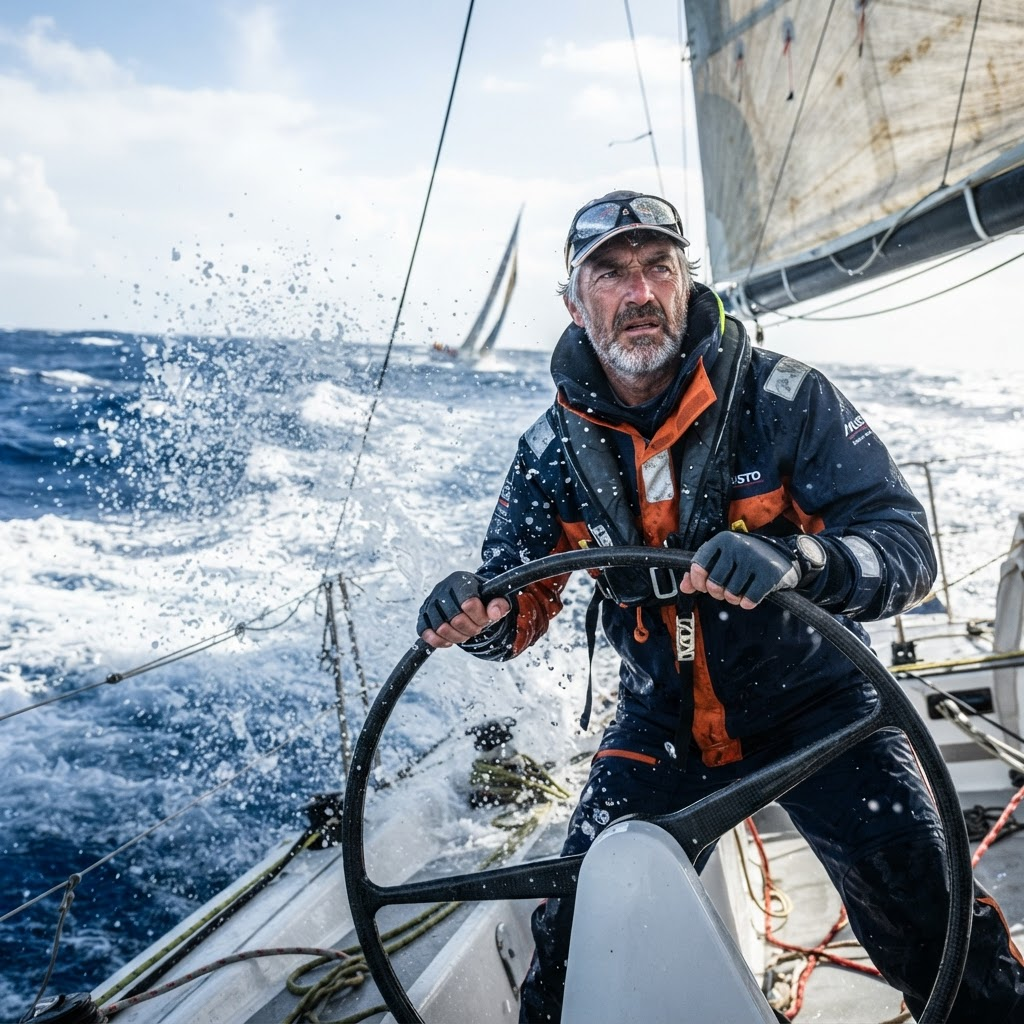
Technique & Training
Sail faster. Race smarter.
Technique is the foundation. Tactics are built on top of it. Neither matters without the fitness and mental clarity to execute under pressure.
This guide covers the essential skills for competitive sailing — from the mechanics of tacking and gybing to the strategic thinking required to win races. Whether you are a club racer or targeting national championships, the fundamentals remain the same.
Boat Handling
The Perfect Tack
Initiate smoothly with full boat speed. Cross the wind slowly — jerking the helm costs momentum. The crew crosses to the new windward side as the boom passes and immediately sheets the headsail. Bear away briefly after the tack to rebuild speed before hardening up.
Controlled Gybing
Pull the mainsail to centreline before the boom crosses. The helmsman holds dead downwind throughout. In light air, let the boat's own momentum carry the boom. In heavy air, active trimming prevents an involuntary broach.
Spinnaker Hoists & Drops
A clean hoist requires pre-flight preparation — pack the kite correctly, confirm the halyard leads outside everything. On the drop, the foredeck gathers the foot first, pulling the kite into the companionway before it can fill again.
Upwind Sailing
Understanding VMG
Velocity made good is not simply boat speed — it is the component of that speed in the direction of the mark. The optimum VMG angle lies somewhere between pointing highest and bearing away for maximum speed. Instruments and feel reveal this number for your boat in each wind strength.
Sail Trim Upwind
The headsail is the engine upwind. The luff should show a barely perceptible curl. Ease until the luff flickers, then trim back one centimetre. The main traveller position controls leech twist — in gusts, ease the traveller rather than dumping the main sheet.
Reading the Gauge
Target boat speed is meaningless without reference to the polar — the theoretical performance chart for your design. Sailing at target speed at target angle in your class is the starting point. From there, adjustments for sea state, swell, and crew weight make the difference.
Tactics
Starting Strategy
Analyse the line bias before the start — the favoured end gives an immediate positional advantage. Arrive at the line at full speed precisely at the gun. A late boat must duck transoms and loses considerable distance. A boat over the line must return and re-start, losing even more.
Working Shifts
In oscillating conditions, always sail on the lifted tack. In a persistent shift, get to the favoured side of the course as early as possible. Compass numbers are your tool — write down your tack headings every few minutes and look for trends.
Mark Roundings
Enter wide, exit tight. Approaching a windward mark wide sets up a tight exit that puts you on the layline for the next leg. At leeward marks, a tight entry allows a wide exit onto the fresh breeze side of the fleet.
Training Plans
Winter Base Training
The off-season is for building fitness, aerobic base, and boat knowledge. Focus on core strength, flexibility, and hiking endurance. Spend time working on rig tuning and understanding your boat's polar data. Sail whenever possible, even in poor conditions.
Pre-Regatta Preparation
In the two weeks before a major event, reduce volume and increase intensity. Focus on starts, mark roundings, and boat handling at race pace. Sail on the regatta venue if possible to understand local conditions and shifts.
On-Water Drills
Tacking and gybing drills at maximum cadence build muscle memory. Start practice — including pin-end and boat-end starts — is time well spent. Downwind drills in pairs, trading gybes, develop tactical instinct alongside technical skill.
Keep learning